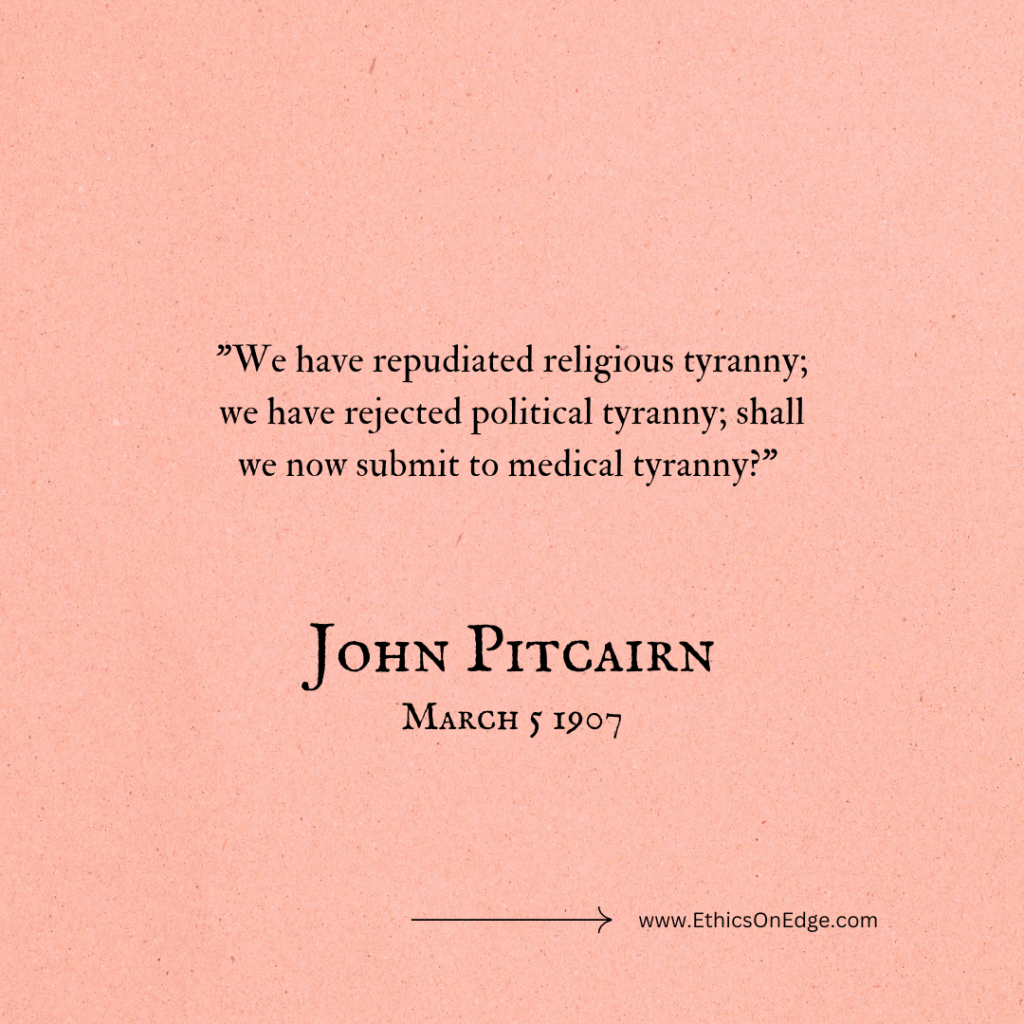
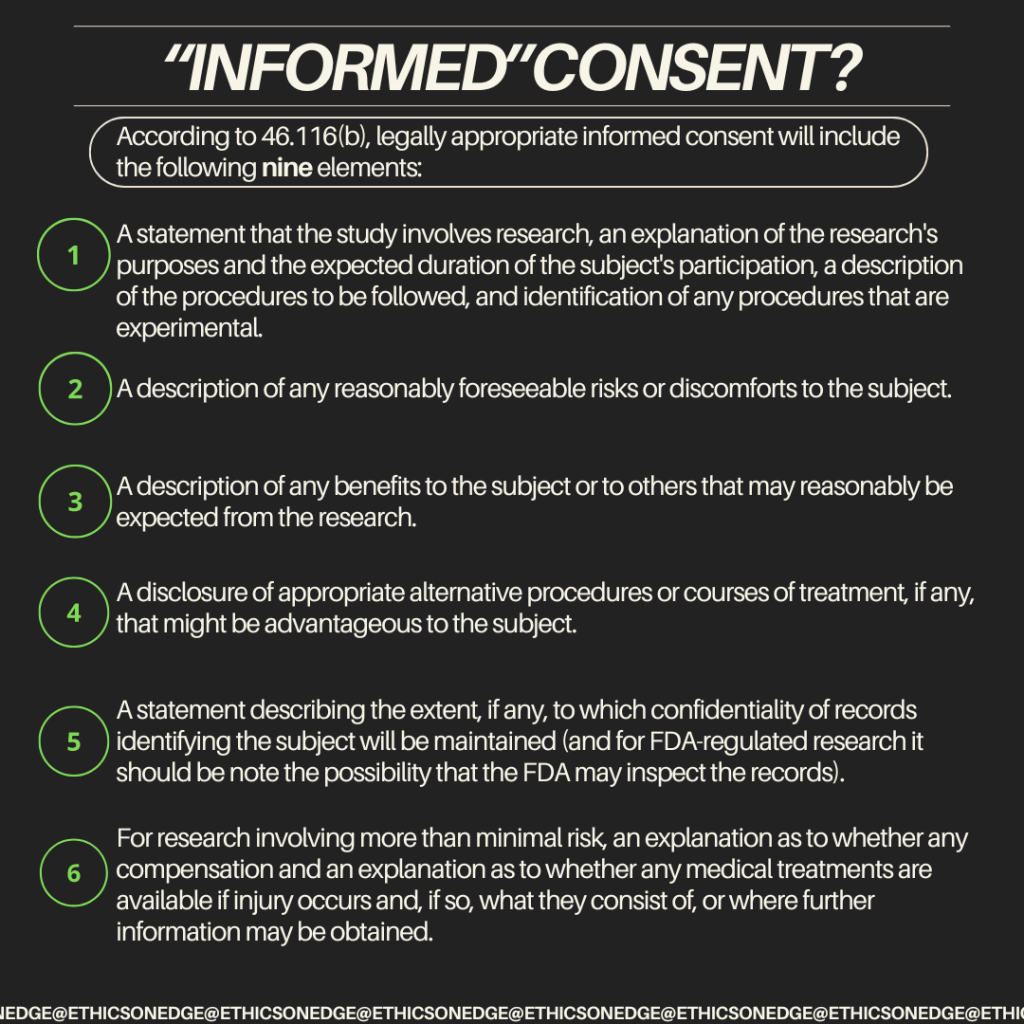
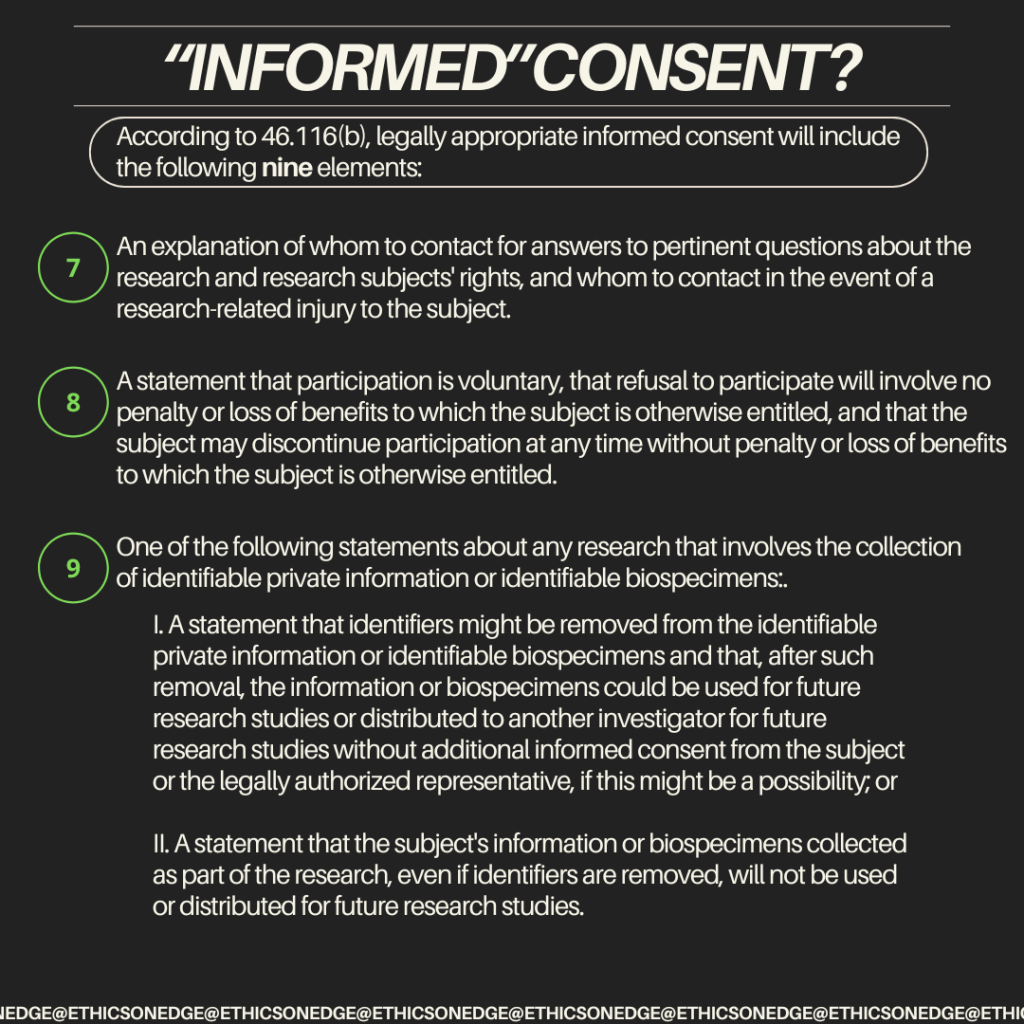
Without over concern for semantics, one must question whether the criteria used by regulatory agencies such as the FDA and HHS/OHRP for biomedical research truly reflect “informed” consent. When considering the impact of withholding information from those seeking to be informed, should we not also evaluate the extent of the consequences of such omissions?
The question is whether informed consent can be fully realized if researchers and regulators are not held accountable due to “innocence by omission,” or the act of withholding crucial information, even unintentionally.
Many patients are diagnosed and saved with medical research and interventions, however, there are many cases where drugs and implantable devices are not well studied. Often, approvals are derelict and processed through elbow-rubbing between private industry and regulatory agencies. Therefore, linear research where future iterations of public medical goods are improved upon rely on an ambiguous approach as neither researcher nor consumer has yet been made aware of the potentials, good or bad.
For instance, many Humanitarian Use Devices are intended only for use in investigational studies for populations of fewer than 8,000 people with rare diseases. While these patients may benefit from the potential remedies offered by the devices, even if the results are suboptimal, the devices can be improved for future patients. This creates a complex situation regarding informed consent, where patients must decide whether to participate in research, potentially being treated as guinea pigs for the benefit of industry and regulators under the guise of humanitarian efforts.
Considering this makes the chosen language rather dark and juxtaposing.
Realizing the effectiveness of leveraging legal language as an attack vector against those engaging in human research for nefarious purposes (gain-of-function, gene editing, cloning, etc.), which begs for a collaborative rethinking of the informed consent construct on how it can be improved for individual and thereby collective empowerment.
 Ethics On Edge
Leave a comment